

I was going to write about slowing down.
About not forcing direction.
About letting things take shape instead of rushing to decide what they were supposed to become.
Lately, I’ve been moving differently. Quieter. More deliberate. I’ve been waiting—letting January, letting 2026, tell me what it wanted from me instead of trying to control the answer too early.
I didn’t really know what direction this Substack was going in. And for once, I didn’t panic about that. I didn’t try to brand it into submission or turn uncertainty into productivity. I let it be unresolved.
Then, a few days later, I didn’t sleep.
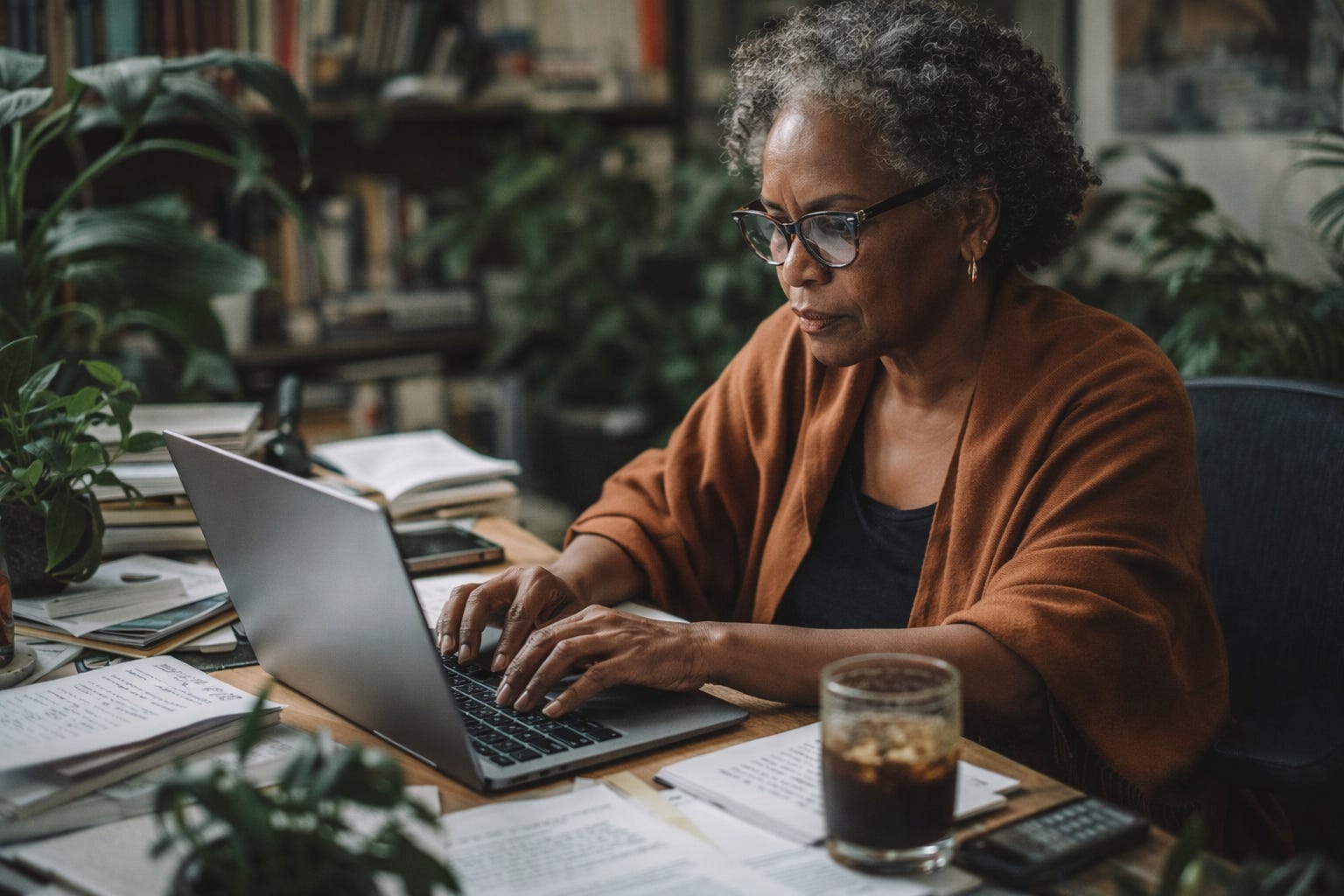
I stayed up researching. Reading. Pulling threads. Going down rabbit holes that felt less like distraction and more like recognition. I wasn’t casually Googling—I was studying. Mapping ideas. Trying to find the lane, not in a content strategy way, but in a this-is-the-work way.
Somewhere in the middle of that night, something clicked.
This is the project.
What I’m working on now centers digital grief and the disappearance of online mourning spaces—what happens when places we grieve, remember, and tend loss inside of suddenly vanish. When memorial pages are deleted. When platforms shut down. When entire digital ecosystems holding memory quietly disappear, and people are left holding grief with nowhere for it to land.
I didn’t set out to research this. It found me.
And then came the realization that surprised me the most:
I can write a peer-reviewed research paper.
Even without formal academic credentials.
Even without moving through a traditional institution.
Not recklessly. Not alone. I have guidance. I have mentors. I have a clear pathway for how this gets done ethically and rigorously.
But more than that, I have the discipline, the care, and the questions.
I’ve spent years working with memory, grief, archives, disappearance, and care—just not always inside academic language. This work isn’t new to me. What’s new is naming it this way and committing to it fully.
So I’m jumping in feet first.
This section of my Substack is where I’ll be working in public—sharing parts of the process as it unfolds. Interview reflections. Reading notes. Moments where the work shifts direction. Moments where it hits harder than expected. Moments where I realize I was wrong, or incomplete, or standing at the edge of something important.
This isn’t finished scholarship.
It’s thinking. Feeling. Listening. Adjusting.
It’s care-centered research in motion.
I don’t need this to be fast.
I don’t need it to be neat.
This work feels important.
So I’m letting myself do it out loud.
Note: I shared an earlier post outlining this research project and inviting interviews. If you’re curious, you can read it below.